Posts

Showing posts with the label Office 365

Open Redirect in Oracle BlueKai

Image
Phishing threat actors are continuously seeking new methods to increase the chances of success in their campaigns. Phishing is still one of the main initial access vectors into target networks. One technique that makes phishing emails particularly difficult to block is the use of open redirect vulnerabilities to distribute malicious links.  Although often underestimated and left unaddressed for months or years, open redirect vulnerabilities can present a considerable risk to your users. Open redirect bugs often occur in the form of a parameter inside a query which contains a URL to redirect a user to.  In late 2020, a client of mine was targeted in a spear-phishing campaign that leveraged a universal open redirect vulnerability in the Oracle BlueKai Data Management Platform. The vulnerability was responsibly disclosed to Oracle Security in December 2020. At the time of writing, the vulnerability remains unpatched and has not been assigned a CVE number (despite multiple other o...
CTI Project: Threats Leveraging Legitimate Services

Image
  Legitimate third-party Platform-as-a-Service (PaaS) providers are becoming increasingly leveraged by threat actors for phishing and malware deployment. PaaS providers such as cloud instances, marketing platforms, content delivery networks (CDN), and dynamic DNS servers have been weaponised for a range of malicious activities. One of the key benefits is that they can be used to  evade detection systems. This is due to the decreased likelihood of these being pre-emptively blocked because of established levels of trust and legitimate usage.  Many of these types of malware and phishing campaigns also combine the use of multiple platforms simultaneously, making these particularly difficult for human analysts and automated systems to identify and malicious activity. The research in this blog details how cybercriminals l everage these systems as credential harvesting pages, payload hosting sites, redirector links, C&C servers, "dead drop resolvers", and for data exfiltrati...

SharePoint Island Hopping: Phishing with compromised accounts

Image
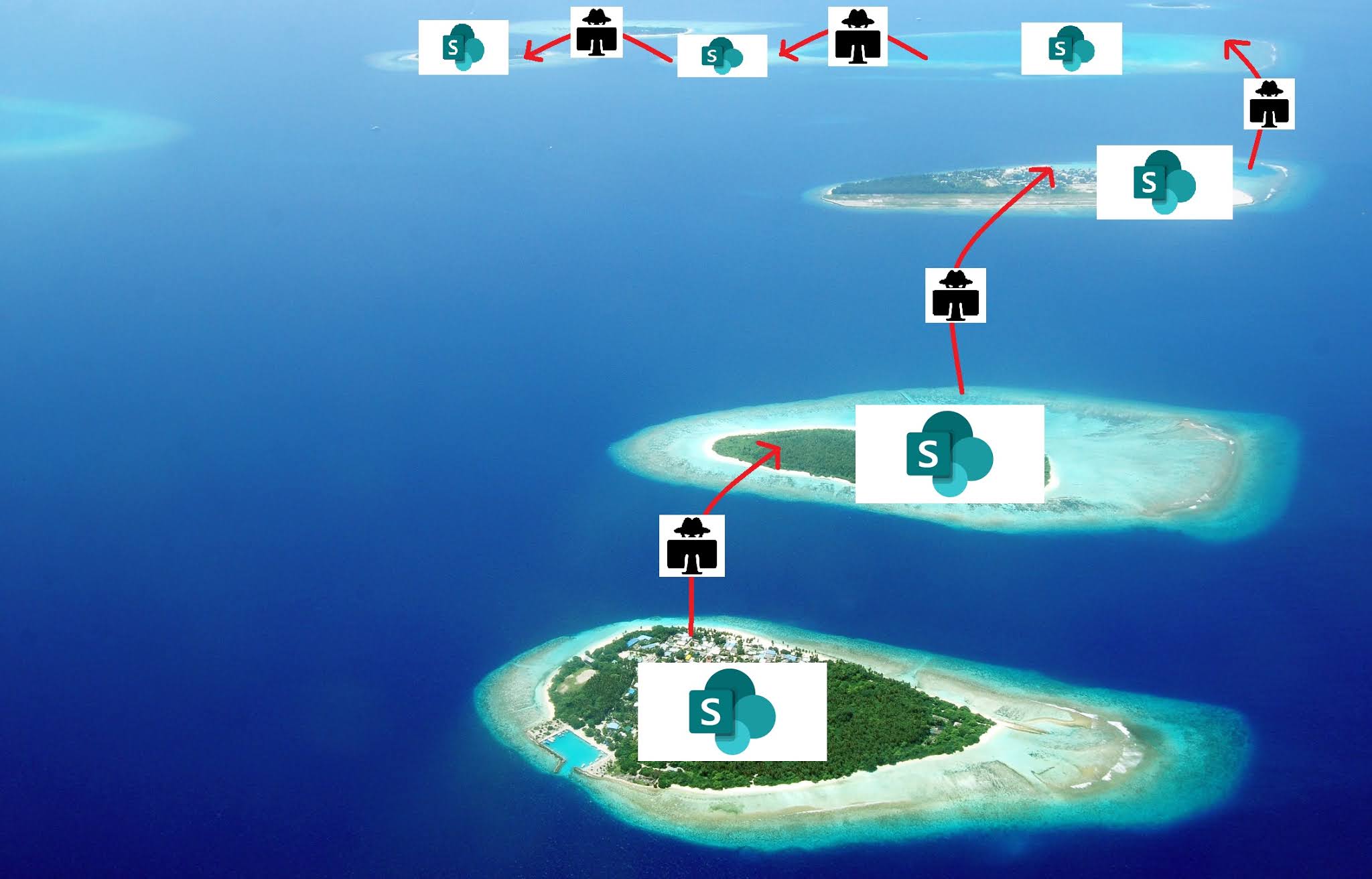
  Phishing threat actors continue to launch successful credential harvesting campaigns via compromised Office 365 accounts. One of the most common themes for these campaigns is a "shared file" notification, whereby a compromised account shares a file with a user that is hosted in the SharePoint drive. The file is usually a PDF document that contains a URL to an external site embedded in an "open document" or "view file" button. If the user clicks on it and enters their credentials they are redirected to login.microsoftonline.com. Although this is an older scam, that has been around for several years, it is still highly effective and is being used to leap from one organisation to another. In this blog, I will analyse a long running phishing campaign that has compromised at least 45 different SharePoint accounts belonging to a variety of organisations over the last year. Fig. 1 - The typical phishing chain used in this campaign Fig. 2 - Various PDF documents...